
A hospital is a place where communication needs to be clear, timely, and reliable. From calling patients for their appointments to making emergency announcements, informing visitors, or creating a calmer atmosphere in waiting areas, audio plays an important role in the overall hospital environment.
This is where professional audio-visual (AV) solutions for hospitals can make a real difference.
A properly designed hospital PA system can help staff communicate across large premises, while a well-planned channel music system can improve the atmosphere in reception areas, waiting rooms, corridors, and other patient-facing spaces.
The key is not simply installing speakers throughout the building. The system needs to be designed around the hospital’s layout, acoustics, departments, operating requirements, and communication needs.
Why Audio Systems Matter in Hospitals
Hospitals can be large and complex environments. A typical facility may include reception areas, OPDs, emergency departments, ICUs, wards, diagnostic centers, pharmacies, corridors, parking areas, cafeterias, and administrative offices.
With so many departments operating simultaneously, relying only on face-to-face communication is not practical.
A professional hospital audio system can help provide:
- Clear voice announcements across designated areas
- Faster communication between departments
- Patient calling and queue announcements
- Emergency and evacuation announcements
- Background music in appropriate public areas
- Zoned audio control for different departments
- Better communication in large waiting and circulation areas
When properly designed, these systems become part of the hospital’s infrastructure rather than simply another piece of equipment.
How PA Systems Improve Hospital Communication
A Public Address (PA) system for hospitals is primarily designed for clear and controlled voice communication.
Instead of having staff members manually communicate information from one area to another, announcements can be delivered through strategically positioned speakers.
1. Patient Calling and Queue Management
Reception areas, OPDs, laboratories, and diagnostic departments often have patients waiting for their turn.
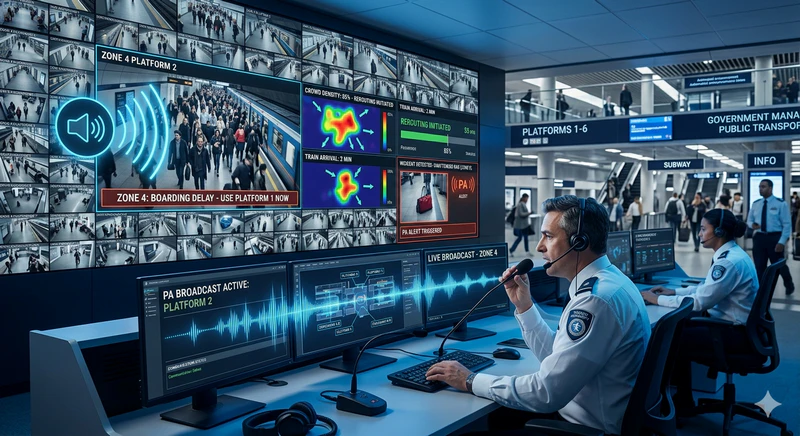
A PA system can be integrated with patient calling or queue management systems to make announcements clearly without requiring staff to repeatedly call patients individually.
This can be particularly useful in busy hospitals where several departments are operating at the same time.
2. Emergency Announcements
During an emergency, communication needs to be immediate and understandable.
A properly designed PA system can help authorised staff broadcast important instructions to specific zones or, when necessary, across the entire facility.
For example, announcements may be required in:
- Emergency areas
- Corridors
- Waiting rooms
- Parking areas
- Public entrances
- General wards
- Administrative areas
For critical communication, intelligibility is more important than simply making the sound louder. Speaker selection, placement, amplification, acoustics, and zoning all need to work together.
3. Department-Wise Communication
Not every announcement needs to reach the entire hospital.
A zoned PA system allows different areas to be controlled independently. For example, an announcement intended for an OPD waiting area does not necessarily need to interrupt a reception area, administrative office, or another department.
This makes the system more practical for large healthcare facilities.
The Role of Channel Music Systems in Hospitals
Not every hospital audio requirement is about announcements.
Patient and visitor experience also matters, particularly in reception areas, waiting rooms, lounges, corridors, and other public-facing spaces.
A channel music system can provide controlled background music or audio programming in selected areas without interfering with important announcements.
The objective is not to turn a hospital into an entertainment venue. Instead, the audio environment should feel controlled, comfortable, and appropriate for a healthcare setting.
Where Can Channel Music Be Used?
Depending on the hospital’s requirements, background music systems can be considered for:
- Reception and registration areas
- Patient waiting rooms
- Hospital lounges
- Cafeterias
- Main corridors
- Visitor areas
- Retail pharmacy areas
- Hospitality sections
- Wellness or relaxation spaces
Different areas may require different audio levels and programming, which is why multi-zone audio control can be valuable.
Creating a More Comfortable Patient Environment
Visiting a hospital can naturally be stressful for patients and families. Long waiting periods, unfamiliar surroundings, and constant activity can make the environment feel even more overwhelming.
A carefully planned background music system can help create a more pleasant atmosphere in suitable areas.
For example, a hospital reception area may benefit from soft background audio, while an emergency department may require communication clarity to take priority over ambient music.
This is why hospital audio design should always be purpose-driven rather than one-size-fits-all.
PA System vs Channel Music System: What Does a Hospital Need?
In many cases, hospitals don’t have to choose between the two. A well-designed installation can use both systems for different purposes.
| Requirement | PA System | Channel Music System |
| Patient announcements | ✓ | — |
| Emergency communication | ✓ | — |
| Staff announcements | ✓ | — |
| Background music | Possible | ✓ |
| Waiting-area ambience | Limited | ✓ |
| Department-wise announcements | ✓ | — |
| Multi-zone audio | ✓ | ✓ |
| Public communication | ✓ | — |
The important consideration is how these systems are integrated and controlled.
For example, background music can operate normally in a reception area, while authorized announcements can take priority whenever required.
Designing the Right Audio System for a Hospital
Hospital audio installation requires more planning than simply deciding how many speakers are needed.
1. Identify Different Audio Zones
Start by mapping the hospital according to its functions.
For example:
Zone 1: Reception
Zone 2: OPD
Zone 3: Waiting Area
Zone 4: Corridors
Zone 5: Emergency
Zone 6: Administration
Zone 7: Parking / Outdoor Areas
Each zone can then be assigned the appropriate speaker type, volume level, and control requirements.
2. Consider Speech Intelligibility
A hospital announcement should be easy to understand the first time.
Simply increasing amplifier power does not automatically improve clarity. Speaker selection, positioning, room acoustics, reverberation, background noise, and system tuning all influence speech intelligibility.
This is particularly important in large waiting halls, corridors, atriums, and other spaces with reflective surfaces.
3. Choose Speakers According to the Environment
Different hospital areas may require different speaker designs.
For example:
- Ceiling speakers can work well in suitable waiting and public areas.
- Wall-mounted speakers may be appropriate in corridors or larger spaces.
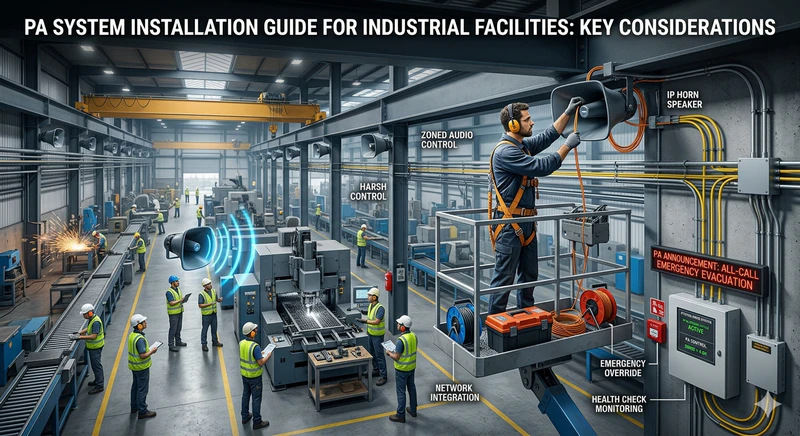
- Horn speakers can be considered for certain outdoor or high-noise environments.
- Specialised speakers may be required for particular architectural or environmental conditions.
The right choice depends on the room, ceiling, ambient noise, coverage requirement, and intended use.
4. Plan the Amplification and Zoning
Large hospitals often need multiple audio zones.
A suitable amplifier and zone-control architecture allows the system to distribute audio efficiently and gives authorised personnel control over where announcements or music are played.
For larger installations, a 100V line distributed audio system can often be practical because it is designed for distributed speaker networks across larger areas. The final architecture should be selected based on the project’s coverage, speaker count, power requirements, and installation conditions.
5. Plan for Emergency Priority
If the system is intended to support emergency announcements, the priority and control architecture should be planned from the beginning.
Important considerations can include:
- Emergency paging
- Priority announcements
- Zone override
- Central control
- Backup power requirements
- System monitoring
- Appropriate fire and life-safety integration where required
Any integration with a hospital’s emergency or life-safety infrastructure should be designed in accordance with applicable codes, standards, and project requirements.
Common Mistakes in Hospital Audio Installation
A few common mistakes can reduce the effectiveness of an otherwise expensive audio system.
Installing Too Few Speakers
Using fewer speakers at very high volume can create uneven coverage, making some areas too loud while others remain difficult to hear.
Ignoring Room Acoustics
Hospitals often have hard floors, glass, tiled walls, and other reflective surfaces. These can create excessive reverberation and reduce speech clarity.
Using the Same System Everywhere
A reception area, ICU corridor, cafeteria, parking area, and emergency department do not have identical audio requirements.
The system should be designed according to the function of each space.
Treating Volume as the Solution
A louder announcement is not necessarily a clearer announcement.
Proper speaker distribution, acoustic planning, DSP configuration, and system tuning can be more important than simply increasing volume.
No Future Expansion Planning
Hospital facilities change over time. New departments, additional floors, renovated waiting areas, and new buildings may be added.
A scalable audio architecture can make future expansion easier and more cost-effective.
Benefits of a Professionally Designed Hospital Audio Solution
When a hospital PA and background music system is properly planned and installed, it can provide several practical advantages:
- Clearer communication for patients, visitors, and staff
- Faster announcements across large facilities
- Better patient and visitor experience in appropriate areas
- Flexible zone-wise control
- More consistent audio coverage
- Better support for emergency communication
- Scalability for future expansion
- Professional and organised hospital environment
The biggest benefit is reliability. In a healthcare environment, the audio system should work consistently when staff actually need it.
Why Professional Installation Matters
Hospital audio projects require more than supplying speakers and amplifiers.
A professional installation company should evaluate the building layout, ceiling heights, room acoustics, ambient noise, department functions, coverage requirements, zoning, cabling, control points, and future expansion requirements before finalising the system.
At AudioCare, we provide customised audio and PA solutions for hospitals and healthcare facilities, from system planning and equipment selection to installation, configuration, testing, and support.
Whether you need a hospital PA system, patient announcement system, background music system, multi-zone audio solution, or a complete AV setup, the system can be designed around the actual requirements of your facility.
Final Thoughts
A hospital’s audio system may not be the first thing people notice, but it can have a significant impact on how efficiently the facility communicates and how comfortable its public spaces feel.
A well-designed PA system helps hospitals communicate clearly, while a properly controlled channel music system can enhance selected patient and visitor areas.
The goal is simple: deliver the right audio, to the right area, at the right time—without creating unnecessary noise.
If you’re planning a new hospital, renovating an existing facility, or upgrading an outdated audio system, professional planning can make a significant difference.
Looking for a reliable audio solution for your hospital?
📞 Call AudioCare: +91 98260 89815
🌐 Visit: www.audiocare.in
📩 Contact us for a customised hospital PA and audio-visual solution.